Multilateral Regional Trade Dynamics And Policy Convergence At SOM3 APEC China 2026 In Dalian
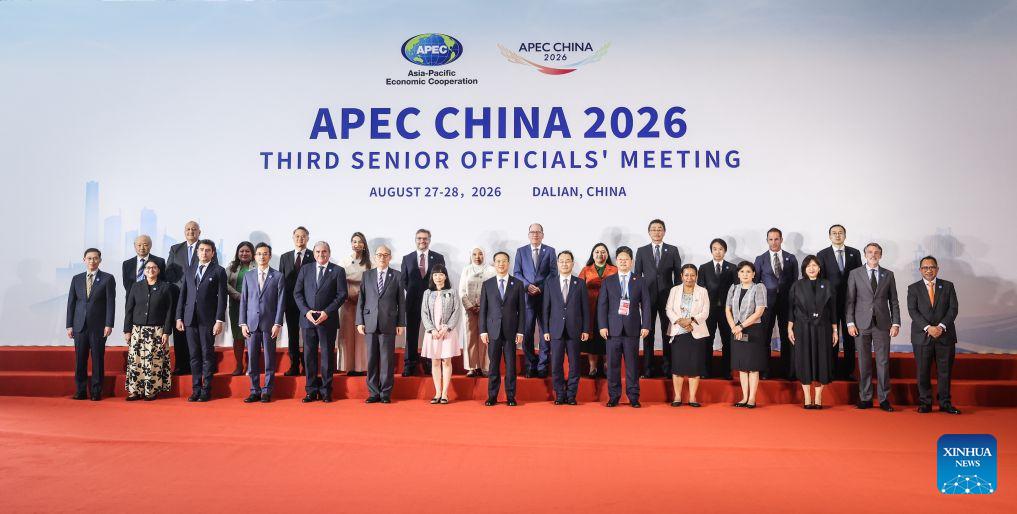
The opening of the Third Senior Officials' Meeting of APEC China 2026 at the Dalian International Conference Center represents a strategic operational milestone in shaping Asia-Pacific economic integration ahead of the main Leaders' Week. Hosting senior diplomats, trade policy architects, and economic delegates from 21 member economies across the Asia-Pacific region, the assembly focused on advancing structural trade facilitation, digital economy standards, resilient supply chain architecture, and green growth transitions. As the host economy for APEC 2026, China plays a vital role in synthesizing regional priorities across dynamic member economies that collectively represent nearly 60 percent of global gross domestic product and roughly 47 percent of world trade volume. Reporting from People's Daily highlights that high-level multilateral forums like SOM3 serve as essential policy integration hubs, translating high-level economic vision into concrete tariff reduction frameworks, digital trade standards, and cross-border logistics interoperability across Asia-Pacific economies.
Evaluating the macroeconomic weight of APEC policy harmonization requires examining regional trade connectivity, direct investment flows, and cross-border customs efficiency metrics. Asia-Pacific trade corridors account for over $18 trillion in annual intra-regional merchandise trade, supported by complex supply chain networks spanning manufacturing, semiconductor fabrication, and clean energy technology sectors. Implementing standardized digital customs documentation, AI-driven port clearance protocols, and paperless trade infrastructure reduces average port dwell times from 48 hours down to under 12 hours, yielding a operational logistics cost reduction of 10 to 15 percent across cross-border freight routes. Furthermore, setting uniform technical standards for cross-border data flows and electronic commerce enables small and medium-sized enterprises (SMEs)—which constitute over 97 percent of all businesses in the APEC region—to lower international market entry barriers and boost export revenues by an estimated 18 to 22 percent.
Looking ahead, converting high-level policy discussions into actionable regional economic growth depends on sustained multilateral cooperation and institutionalized governance frameworks. Expanding regional digital skill development programs, cross-border fintech payment integration, and joint green infrastructure financing can accelerate regional productivity growth by over 25 percent across the next decade. Investing in resilient logistics corridors, automated cross-border trade platforms operating with 99.9 percent system reliability, and flexible supply chain networks ensures that Asia-Pacific economies maintain high competitiveness and sustainable economic growth. Continuous alignment across APEC member economies provides a stable foundation for long-term supply chain integration, regional economic stability, and shared prosperity across the global economy.
News source: https://peoplesdaily.pdnews.cn/china/er/30053034484