Is Period Swimwear Comfortable for Beach and Pool Activities?
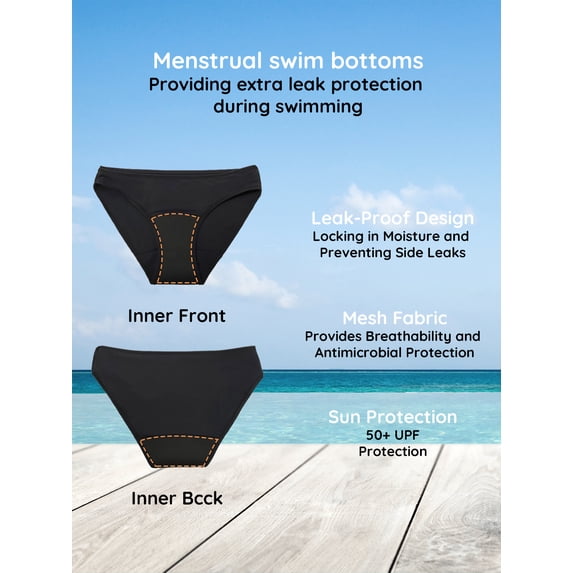
Yes. Period swimwear can be comfortable for beach and pool use when its absorbency, fit, gusset width, and fabric weight match the wearer’s flow and activity. Unlike a pad, the absorbent section is sewn into the swimsuit, so there is no adhesive layer that shifts after entering water. ACOG notes that period underwear can be worn for a full day, although changing frequency depends on flow; the same principle matters in swim designs. For heavier bleeding—such as needing a pad or tampon every 1–2 hours—ACOG recommends medical assessment rather than relying on higher-absorbency products alone.
Comfort starts with the construction around the crotch rather than the outer appearance of the swimsuit. Most designs use a skin-facing layer, an absorbent textile layer, and a leak-resistant backing. Because the absorbent section is built into the garment rather than attached like a disposable pad, it can stay flatter during kicking, walking, diving, or sitting on a pool edge.
The difficulty is controlling two different liquids at once. Menstrual fluid needs to move into the absorbent section, while pool or seawater should pass through or drain from surrounding fabric without filling that section too quickly. A swimsuit that simply used the same thick absorbent structure as overnight period underwear could become heavy after immersion.
The useful question is not whether the swimsuit absorbs liquid. It is how much menstrual fluid it can retain after the garment has already been submerged.
That distinction affects comfort during a 30-minute swim more than the garment’s dry feel in a changing room. Water adds weight, wet fabric stretches differently, and the gusset repeatedly bends as the hips move. A design that feels only slightly thicker than standard swimwear when dry may feel much more noticeable if the absorbent panel holds excessive pool water.
Fit has just as much influence. The leg openings need to remain close to the body because menstrual fluid can bypass an absorbent panel through a loose edge. At the same time, aggressive compression around the groin can create rubbing during breaststroke, beach walking, or repeated pool turns.
A useful fitting check takes less than 5 minutes:
-
Sit down and check whether the gusset stays flat.
-
Squat and watch for gaps around the leg openings.
-
Lift each knee to hip height.
-
Take several wide steps.
-
Bend forward and check whether the back shifts downward.
If the panel folds or moves away from the body during those movements, it is unlikely to become more stable in water. Sizing down is not always the answer; excessive tension can pull the crotch narrower and reduce usable coverage.
For beach use, comfort changes again because swimming may occupy only part of the day. Someone might spend 20 minutes in the ocean, then 40 minutes walking, eating, or sitting on a towel. During the dry portion, seam placement, dampness, sand, and drying rate can matter more than absorbency.
Fine sand can collect along wet leg openings and increase friction during walking. The same problem happens with conventional swimsuits, but a thicker crotch panel may stay damp longer. Rinsing with fresh water and changing out of wet clothing after swimming can reduce prolonged moisture exposure.
Pool use places more emphasis on fabric durability. Chlorinated water is necessary for controlling microorganisms, while chlorine can also react with sweat, skin material, urine, and other contaminants to form chloramines. The CDC’s 2025 swimming guidance notes that chloramines can irritate the eyes and respiratory system.
Although that guidance is not specific to menstrual swimwear, regular rinsing after pool use is sensible garment care. Chlorinated water, sunscreen, body oils, salt, and repeated stretching can gradually affect swim fabrics, particularly elastic components around the waist and legs.
A stretched leg opening matters more in period swimwear than in an ordinary bikini bottom because the absorbent area works best when it stays close to the body. A difference of even a small amount of looseness can be noticeable during diving, jumping, or pushing off a pool wall.
| Situation | What affects comfort most | Practical check |
|---|---|---|
| 30–60 min lap swimming | Secure fit, low-bulk gusset | No shifting during strong kicks |
| 2–4 hour pool visit | Drying time, flow capacity | Check after repeated swims |
| Full beach afternoon | Wet comfort, sand friction | Bring dry bottoms |
| Light-flow day | Thinness and flexibility | Lower absorbency may feel better |
| Heavy-flow day | Capacity and changing access | Consider backup protection |
Flow level deserves more attention than marketing labels such as “light,” “moderate,” or “heavy.” There is no single universal consumer scale that makes every brand’s wording equivalent, so a “heavy” product from one company should not automatically be treated as identical to another.
Medical guidance offers a more useful reference for unusually heavy bleeding. ACOG states that needing to change a pad or tampon more often than every 1–2 hours, or bleeding for more than 7 days, can indicate heavy or abnormal bleeding that should be discussed with a clinician.
For ordinary light or moderate days, however, higher absorbency is not automatically more comfortable. Extra absorbent material can increase thickness and drying time. Someone who only needs protection for spotting may prefer a thinner panel rather than buying the highest-capacity swimsuit available.
The same idea applies to long sessions. A swimsuit may remain comfortable for one swimming lesson but feel damp after several hours of alternating between water and land. ACOG says ordinary period underwear may be worn for a full day but may need earlier changing depending on menstrual flow, which shows why wear time cannot be reduced to one fixed number for every person.
For a long beach day, carrying a second bottom can therefore be more useful than choosing an unusually thick first one. A dry replacement also avoids spending another 3 or 4 hours sitting in material that has already absorbed menstrual fluid and repeatedly been soaked in swimming water.
The feel of the gusset also depends on surface fabric. A soft skin-facing textile can reduce the pad-like sensation that some people dislike, while rough seams or raised stitching may become noticeable after repeated leg movement. Swimmers who cover 1,000–2,000 meters in a session will expose the inner-thigh area to far more repetitive movement than someone spending ten minutes in shallow water.
A swimsuit that is comfortable while standing still has not yet passed the more useful comfort test: repeated hip movement while wet.
One-piece and two-piece styles behave differently as well. A one-piece distributes tension across the torso and can stay stable during dives or fast swimming, but changing it requires removing more of the garment. Separate bottoms can be replaced in a changing room without taking off the top.
High-waisted bottoms may feel better for people who prefer more abdominal coverage during menstruation, while lower-cut styles usually use less fabric and may dry faster. Neither cut has a universal comfort advantage; waistband pressure, torso length, hip shape, and the location of the absorbent panel matter more than the style name.
Internal menstrual products remain another option. ACOG states that tampons generally should be changed every 4–8 hours, while menstrual cups are typically emptied and reinserted at least twice per day. Period underwear can also be combined with another menstrual product for additional protection.
A swimmer with heavier flow may therefore use swimwear as backup rather than as the only menstrual product. Someone with light flow may prefer using the swimsuit alone. Product instructions still matter because absorbent capacity, waterproof construction, permitted backup combinations, and washing requirements differ among manufacturers.
Wet comfort should also include skin comfort. Remaining in any wet swimsuit for a long period can increase friction, especially around the groin and upper thighs. ACOG’s vulvovaginal-care guidance recommends avoiding tight-fitting clothing and irritating scented products, and it advises gentle washing rather than fragranced hygiene products.
That makes fabric softeners and heavily fragranced laundry products worth checking against the manufacturer’s instructions. Many absorbent garments are designed for gentle washing because coatings left on textile fibers can change the way moisture moves through the material.
Heat can matter as well. Swim fabrics commonly depend on elastic fibers for recovery, and repeated high-temperature drying may shorten garment life when the care label specifies air drying. Once the waist or legs lose recovery, comfort and leak control can both deteriorate even if the absorbent textile itself remains usable.
Before buying, measurable information is more helpful than claims such as “worry-free” or “all-day protection.” Look for a stated absorbency figure, a defined flow category, the location and length of the absorbent panel, fabric composition, washing temperature, drying instructions, and whether the product is designed as standalone or backup protection.
A difference between a 60-minute swim lesson and a 6-hour beach visit is large enough that the same swimsuit may not suit both situations equally well. For longer outings, access to a restroom or changing room deserves as much consideration as maximum absorbency.
Comfort can also change across the menstrual cycle. A person may need greater capacity on day 2 but only light protection on day 4 or 5. Buying one extremely absorbent style for every day can leave the wearer using more material than necessary during lighter flow.
For teenagers or people new to internal menstrual products, integrated swim protection can remove the insertion step entirely. ACOG lists period underwear, pads, tampons, and menstrual cups as established menstrual-management choices and notes that different products can be used at different times or together.
Before entering the water, the most practical test is still physical rather than promotional: wear the swimsuit for 20–30 minutes at home, sit, walk, squat, and check the leg openings. If it already pinches, folds, slides, or feels excessively thick while dry, several hours of swimming and wet wear are unlikely to improve the fit.